


 Télécharger l'article
Introduction
This study focuses on how a few technologies can be applied to traditional painting, based on the author’s experiments expressed on paintings along this essay, and questions about the actual state of these tools for people involved in creating images. For example can artificial intelligence, as part of a computational science under development for creation, represent an interesting resource for visual artists as an aid in the realization of works of different proposals?
Along with the author’s participation in the Cromáticos research group[1] which resulted in the co-authorship of two texts, with researcher Vitor Iwasso, for the book Reflexões sobre a Cor (Martins Fontes, Brazil, 2021), an interest emerged in investigating the connection between new technological resources and contemporary painting, forming the fundamental cornerstone of the initial doctoral thesis project in 2020/21 by the author.
These inquiries led to a search guided by two main objectives: what technology means for art and painting, as well as its importance for the artist who expresses themselves through technology. This involved analyzing, from the perspective of someone involved in artistic creation, as well as from the standpoint of a user of all these paraphernalia of devices, the tools and platforms used since the mid-1990s, and what this means for those who appreciate artworks mediated by all this apparatus under development since approximately the 1960s.
It is worth remembering that the texts presented here are created by a visual artist who works predominantly with painting and, occasionally, other media. This means that art and digital technology will always be treated from the viewpoint of someone who uses paint, brushes, and solvents as a poetic path – which should be considered when analyzing the ideas and arguments presented.
Technological progress in the last three decades of the 20th century had a significant impact on artistic forms – such as photography and cinema – even though these media were born at a turning point in how scientific evolution entered human daily life. For painting and other more traditional areas – such as sculpture or engraving – innovations, especially those linked to computer science, are not reflected in an operational change for the artist when handling paints and brushes.
Painting, as an artistic medium that has accompanied humanity almost since its beginning, has been alongside various technological changes throughout history. Some compare the current moment to the invention of photography in the 19th century, to remind those who thought or said that the manual creation of imagery representations was a dead practice. This was due to photography allowing the automated creation of images, and what was seen was the emergence of Impressionism (and subsequently the historical avant-gardes), with painting taking on a new role in society.
Until the emergence of photography, the pictorially constructed image was important for its symbolic content and not for the fact that it was produced with paints, fabric and brushes. A few decades after the emergence and massification of both photography and cinema, electronic forms of image and sound creation emerged, such as television.
If, on the one hand, the automatism of photography would have taken away the artisanal work of making images, there was still an indexical physical materiality, with a record of photons in grains of silver; on the other hand, the electronic image of television was fleeting, with a merely temporal existence, leaving no tangible traces, paving the way for the existence of an image transformed into computer code, years later, and lately, those generated by prompts on AI platforms.
1. Practical Effects of a Digital Experience in Pictorial Research
Technology is part of the life of almost everyone who was born in the late 1970s and the 1980s, whether electronic, analog or digital. Children of that time didn’t think about how devices worked – they simply used them. As they grew up, they adopted new gadgets as they appeared and integrated them into their daily lives when possible. As an adult, the blend between traditional art and digital imaging technology was “the way to go” for the author of this research.
The object of this study is a piece of a pictorial investigation which began in 2008, consisting of painting by observation of photographs.
The act of using these images as a reference recalls concepts defended by Flusser, such as when he makes a comparison between traditional images (including painting) and techniques in the way they both create representations of the world:
“... the traditional image is a first-degree abstraction: it abstracts two dimensions from the concrete phenomenon; the technical image is a third-degree abstraction: it abstracts one of the dimensions from the traditional image to result in texts (second-degree abstraction); then, they reconstruct the abstracted dimension to result in an image again." (Flusser, 2002, p. 21)
In addition, he states that "... technical images imagine texts that conceive images that imagine the world". (Flusser, 2002, p. 21)
Painting from technical images would then be a new abstraction, perhaps of a new "degree", a decoding of a technical reading of the world.
This research started with the rediscovery of an album of photographs taken during a visit made in 1996 to an amusement park. There was a series of blurred or strange shots: they seemed to have been taken during a ride on a roller coaster. They had a visible effect of speed, as well as an accidental aspect, without a defined framing or subject. These characteristics caught attention and became a reference for painting, instead of direct observation of objects or landscapes, and this procedure lasted almost unaltered from 2008 until 2022.
Parallel to all this, technology companies began investing in image analysis – such as Google, through its Photos platform. The company created a sophisticated recognition system not only for faces, but also for objects and texts. This allowed its users to search for images by terms like color or object description, in addition, of course, to people's names. If someone searched for "blue boat," the system would show all photos with blue boats present in the user's library. In other words, machines had learned to see – recognize shapes, objects, letters, colors, places – in a more attentive way than most humans.
In 2020, when reviewing this image archive separating the "bad" (blurred, out of focus) images from the "good" ones, the question arose: how would a computational tool interpret these “bad” ones? And not only the references, but mainly, the paintings made of them.
At that time, artificial intelligence was a reality in several aspects, but not as a viable instrument for the creation of images, texts or sounds in a satisfactory (or usable) way.
In 2022, there was an advance in this pictorial research started in 2020, using references captured in parks by the author between 2009 and 2011. These were late afternoon and early evening scenes.
Thus, the images have a more abstract aspect, with distorted and blown-out lights due to longer exposure times combined with device limitations and, mainly, the fact that they are taken in motion.
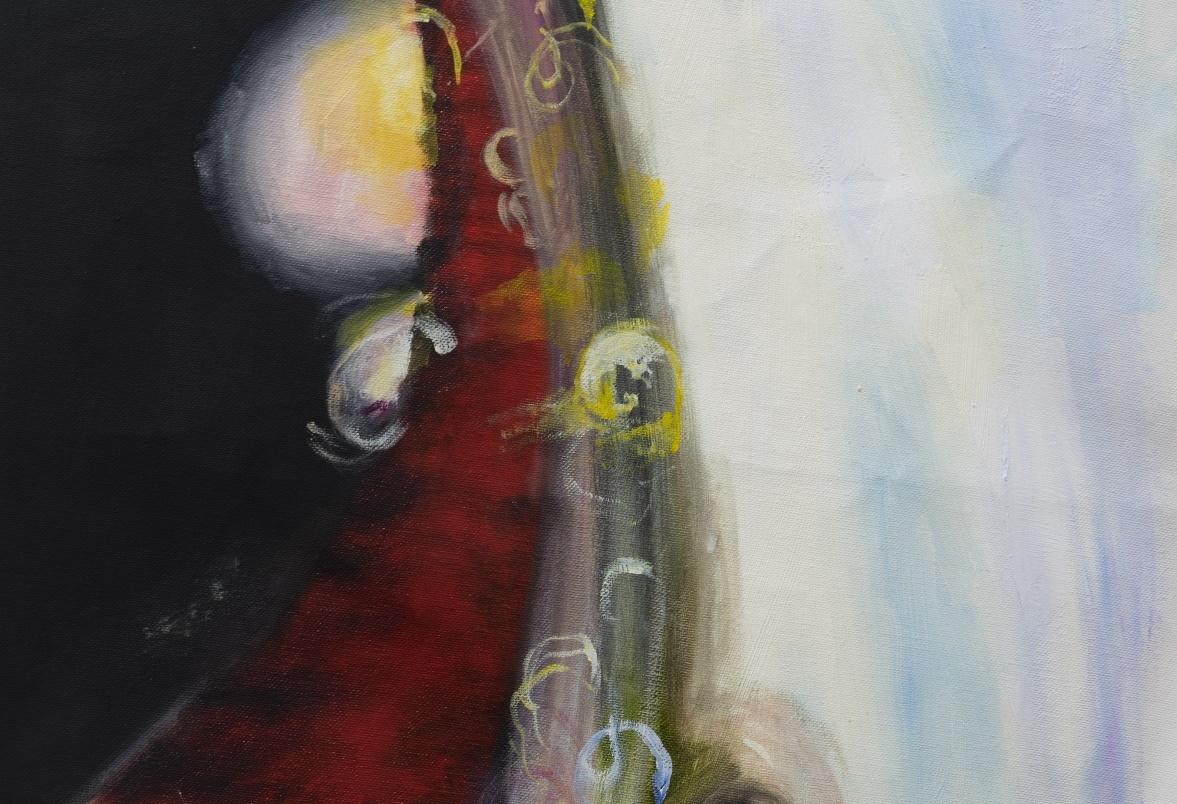
Figure 6 - Sheikra V, oil on canvas, 30x40cm, 2022.
"Sheikra V" was made from an image present in the Busch Gardens park, captured on the Sheikra roller coaster - a very popular attraction with a very interesting peculiarity for this research: there is a mechanism that makes the visitors stand in relation to the ground in the first dive, changing position in relation to the tracks during the ride. Due to this position, the sensation is very different from other rides, as if something or someone is pulling the person down, in a vertical fall into the void.
The focus here was still on the question of how the machines would analyze these works. Including, if a developer created an application to evaluate art, how would they classify them. Abstract painting? Landscape? Would it be able to identify which attractions and which amusement parks these images referred to?
In parallel with the painting work on these canvases, the author began contact with content creation platforms that were becoming more accessible in 2022, such as Stable Diffusion, Dall-E, and Midjourney. The goal was to obtain images like those obtained when visiting the parks.
"SD 1" refers to one of the first experiments made from a prompt[2] with the Stable Diffusion platform, then processed by Dall-E to expand the original square into a wider, 3:2 aspect ratio image.
It is worth a comment, recalling the concepts discussed by Flusser regarding the abstraction of the world – these images are generated from textual descriptions, not being an abstraction of the world or reality, but of the instructions written by the operator.
During the early years of the earlier phase of research mentioned here, there was interest in studying a later phase of futurism known as aeropittura. In particular, the set of works by Tullio Crali from his early years, such as "Ali Tricolori", from 1932. In it there is a clear mention of airplanes and the countryside, in addition to the evocation of movement through the progressive repetition of forms in increasing dimensions. There was also interest in later, more abstract works, such as "In Fase di Atterraggio" (1962), with the fragmentation of elements in a late allusion to both collage and Cubism.
The image generated by Stable Diffusion has brought back the memory of futurism, now analyzed in another direction: there was a certain satisfaction with the interpretation of AI, mainly due to an allusion to works from the early phases of Italian futurism, such as the series "Stati d'Animo" by Umberto Boccioni, and "Mercurio transita davanti al sole" by Giacomo Balla.
Both artists are part of the beginning of Futurism and were influenced by Cubism in their works, but with the difference of the use of colors as a fundamental element of the works.
A spatial fragmentation can be noted in the paintings mentioned by means of lines and shapes, which refers to both a spatial movement and a temporal displacement - a clear allusion to the sequentiality observed in the frames of a cinema film - as if they were observed superimposed on each other, maintaining a trail of the recorded figures. Although it is a mere speculation as to this procedure, the kinetic notion is a fact - the result of the historical moment in which these artists are situated. It is almost impossible to imagine this kind of act 50 or 100 years before the invention of cinema.
There is an opposite relationship here: in the works cited, the notion of movement is given by the segmentation of pictorial space, while in "SD_1" there is a freezing, even if artificial, of time. The lines and shapes direct a viewer's gaze, showing a path that will be followed as they move. He is, therefore, the subject of an action, a first-person view. Boccioni and Balla, in turn, narrate a trajectory in the third person.
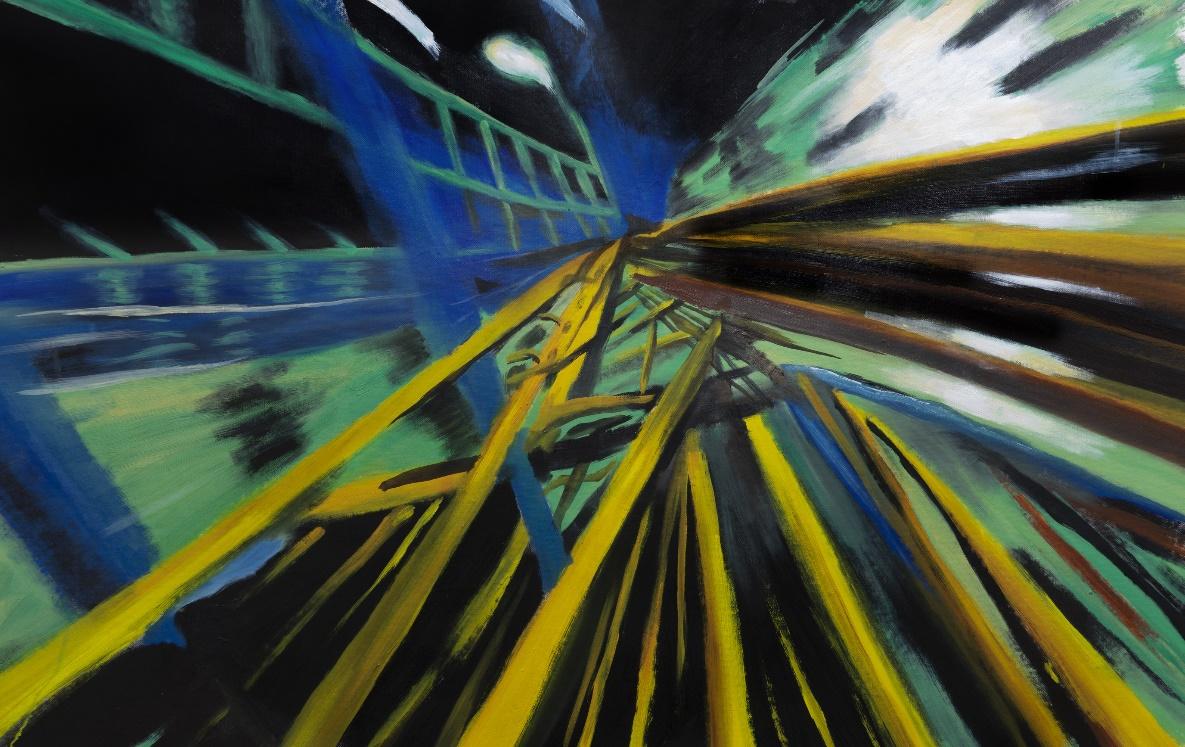
Figure 15 - SD I, oil on canvas, 60x100cm, 2023.
The idea of producing paintings in parallel from opposite references – created by humans and originating from a "delirium" of AI – led to the question, in the first place, whether it would be possible to distinguish which image had inspired the works, simply by standing in front of them, without any information. Would the pictorial production hide some special characteristic of one or another medium, or would the choice of "subjects" already act as a kind of veil partially or totally hiding characteristics that would lead the viewer to discover the origins of the images?
The answer, at that time, was negative. In part, due to the choice of human-created references, the fact that it is not possible to identify location markers or clues such as monuments or some particular landscape – which is obvious – but it is also clear that if AI were asked to create something that evidenced, for example, a specific park, some element could be included that would lead to the identification of something familiar to a visitor.
At this point in the research, the desire to alter the chromatic palette emerged after years of trying to approximate the colors present in the references and maintain some fidelity, without thinking about any intervention – at most one or two deviations, but always subtly.
The decision to take a new approach was made, and it would be emotional or sentimental: the choice of colors would be based on the feeling of joy, contentment, and pleasure they provided. Including hues the artist had never used before. From then on, this would be the criterion – at least temporarily.
This chromatic approach recalled the duo Robert and Sonia Delaunay. Not by chance, both were influenced by Cubism, like the Futurists, but achieved a development more oriented towards the use of colors in a more luminous way. They were important artists at different phases of this research over many years – initially for their use of aerial references and the thematization of the modernity of their time – and more recently for their chromatic approach.
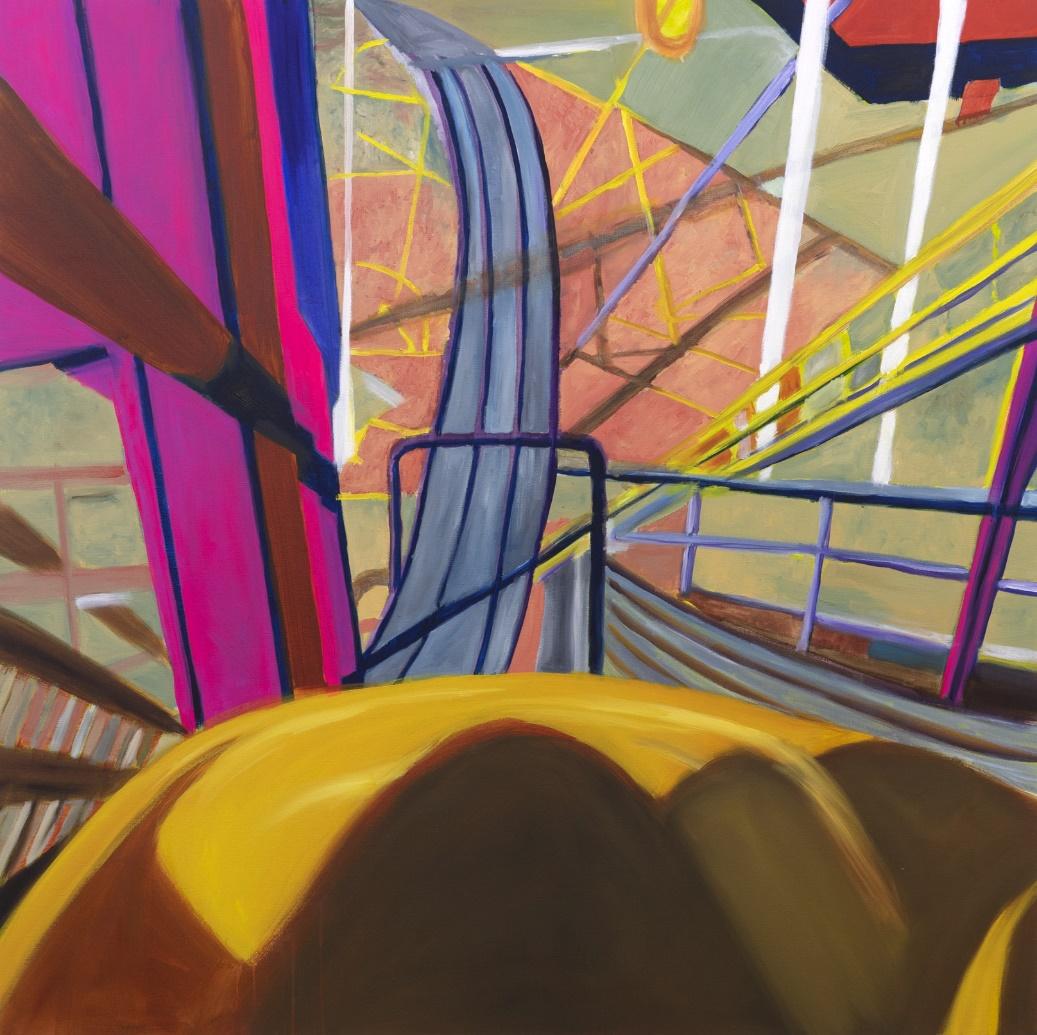
Figure 20 - Dall-E_ex004, oil on canvas, 100x100cm, 2023.
Within this new premise, the creation of "Dall-E_ex004" began, based on an image created by the platform that gives the painting its name.
After that, the next step of the research included an element of automation in the process of pictorial elaboration: the use of a projector to transpose the references to the canvases. From the beginning, still in 2008, the creation of the works took place through the free observation of photographs, printed on paper or on a computer or tablet screen, in a process of manual drawing of the main elements on the screen. There is a mental operation involved in the choice and especially in the interpretation and translation of what is seen by those who perform this step.
With the projection, the intellectual tasks of interpreting the references do not disappear but change the moment in the realization of the painting.
In "Millenium Force", this procedure was used, with the feeling that there is no difference noticeable to the viewer.
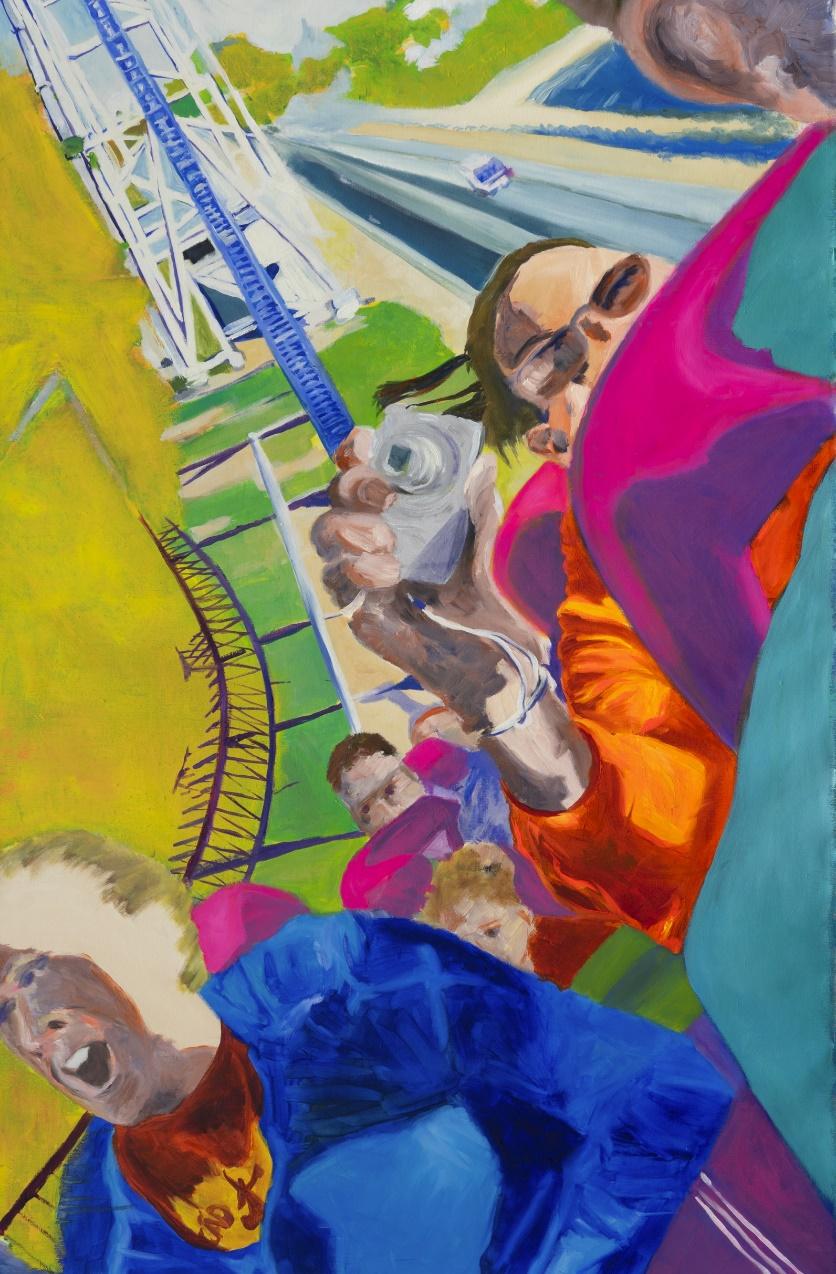
Figure 27 - Millenium Force, oil on canvas, 100x70cm, 2024.
There are details to be highlighted in relation to "Millenium Force": the presence of people satisfies one of the artist's wishes for the continuity of the research but demonstrates the condition of this representation in its original capture: it is a memory of a day on any tour. Although it is obvious information, it gains a different weight when analyzed in the current context of mid-2020 cases of anonymous people posting photos of themselves or their friends and family freely and openly on the internet are increasingly rare. In a quick search on a social network, we find few records of this kind (apparently people have preferred temporary publications for this type of content, such as Instagram stories and other networks).
The experiment of using AI to expand the content of an image became a procedure to be explored in subsequent paintings: 6 horizontal images transformed into vertical ones, this time using a commercial tool made available by Adobe, Firefly, embedded in the notorious Photoshop, and all transposed onto the canvas using a projector.
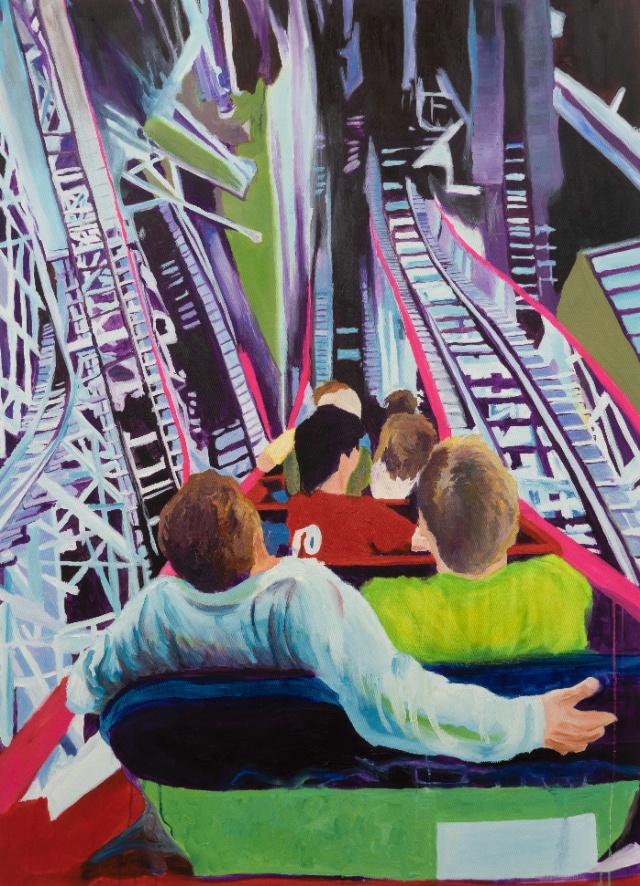
Figure 41 - Cyclone II, oil on canvas, 140x100cm, 2025.
"Cyclone II" is the work that concludes this research: it presents the premises of the previous ones and attempts to demonstrate the relationships between technology and painting. However, here, the option was to experiment with an older technique, underpainting, [3] which ended up being more incorporated into the final result than initially foreseen. In the initial stage, there was thought of making a greater intervention, even transforming it into a nocturnal scene, with a cyberpunk atmosphere. However, the lack of luminous elements, such as neon signs, could bring an artificiality that would be out of tune with the descriptive and nostalgic aspect.
Conclusion
After months of research, the answer to the initial question regarding the possible relationships and implications of digital technology from the first decades of the 21st century for painting as an artistic medium and practice are simultaneously varied and ambiguous.
Regarding the production commented here, it can be noted that the entire technical set used – artificial intelligence, photography, digital image processing, obtaining references – is by no means thematized in the works created, nor are any eventual technical or scientific details of the scenes portrayed. They are like rebar, plumbing, and wires behind the walls of a building – they are there, but they are not and do not need to be visible.
As Couchot notes in his text, “[...] The influence of science on art is indirect and metaphorical. Except for optics and geometry, or anatomy (which is experimental), it provides more ideas, inspires, confirms, or serves as an alibi." (COUCHOT, Edmond, p. 281.)
There is still no crucial interference in the marriage between science and technique that has fundamentally altered painting as a technique.
Despite some new types of paints, with physical characteristics made possible only by advances in the creation of new materials and by chemical manipulation to an unimaginable level years ago, allowing for effects such as the complete absorption of light resulting in a color without any reflection – thus becoming profoundly dark – there has not been, to date, a "revolution," such as a digital printer replacing the brush, or any scientific innovation that brought something truly new.
The most likely reason for the absence of such an event is due to the orientation of investments in new technologies aimed exclusively at profit as quickly as possible - largely due to the fact that the financial volume required to create and launch new products becomes greater as time goes by.
Capital allocated to technical innovation is directed towards broader projects, often guided by the notion of scalability, whereby a product or service will only be born if its number of consumers can be expanded almost infinitely. This contrasts with visual arts in the current scenario, which constitute a restricted market from the perspective of those who prioritize the volume of units purchased or used.
But there is an intertwining of Couchot’s statement with the research developed, making it possible to confirm it with regard to the provision of ideas, and perhaps, the question of the alibi, whose synonyms (within or outside the legal sphere) are, among others, justification, pretext, or allegations in someone's favor. In this case, technology and science would have enabled the existence of roller coaster images and their subsequent manipulation and transposition onto canvases in the studio. After all, the first records of this long series were not created with the intention of serving as references, being something accidental a priori. A considerable part of the imagery discussed here could be classified as a kind of residue of the entertainment industry's consumption experience, recycled in the form of memories.
Painting, as a medium of presence in time and especially in space, fundamentally opposes the dismantling of physical experience. This dismantling is essential for the aforementioned scalability and consequent monetization of the experience linked to various types of pleasure felt by human beings. The live appreciation of pictorial work in a museum or gallery is not yet something that can be mediated (and charged for its use) by a technical device, and this is one of the reasons why I understand it is necessary to continue producing these works.
Références bibliographiques
Benjamin, W. (2015). The work of art in the era of its technical reproducibility [Kindle edition]. L&PM Editores.
Crary, J. (2014). 24/7 – Late capitalism and the ends of sleep. Cosac & Naify.
Couchot, E. A Tecnologia na Arte – Da Fotografia à Realidade Virtual. Tradução de Sandra Rey. Porto Alegre: Editora da UFRGS, 2003. (original in French: La Technologie dans l’art. De la photographie à la réalité virtuelle, Éditions Jacqueline Chambon, 1998)
Flusser, V. (2002). Philosophy of the black box: Essays for a future philosophy of photography. Relume Dumará.
Han, B.-C. (n.d.). In the swarm [Kindle edition]. Editora Vozes.
Hui, Y. (n.d.). Technodiversity.
[1] http://dgp.cnpq.br/dgp/espelholinha/04115698835628801329341
[2] Prompts in this context are a set of textual instructions for an artificial intelligence to create some type of content or text.
[3] A painting technique that consists of making an initial layer of paint, usually in dark tones, to establish the composition and mark areas of shadow or darker tones as opposed to light or bright areas, and in addition to achieving a sense of volume.
 Contacter l'auteur
 Lire la suite